Showing posts with label Fantasy. Show all posts

Friday, 1 May 2026

Review - A Trade of Blood by Robert Jackson Bennett


Cover - A Trade of Blood by Robert Jackson Bennett
It was a pleasure once more to step into the world of Ana and Din, the intrepid investigators of the Shadows of the Leviathan series by Robert Jackson Bennett. This third book sends them to an area of the Empire more familiar to Din, the city of Lacanthim. Initially, it seems like they have been assigned to a clear cut and unintriguing case of the murder of a beautiful girl, part of a struggle between two aristocratic families. However, the crime is a strange one and the motives of the survivor, the main suspect, and the ruling Burav and Armenta clans of the district are unclear. What follows is the solving of a murder mystery that will prove a strong test for Ana's problem-solving abilities.

This third instalment of the series is once again a triumph of world building, and the ever-present, unusual environment finds ways to permeate through the entire story and its characters. The clans have been fighting a long battle over the valuable animal and plant grafting and harvesting  businesses of the area. There are ways these two families have exploited to breed and control altered beasts, which involve the hiding or willful ignoring of unpleasant and immoral practices. The atmospheric descriptions of the altered forest, the effects of a substance that can infect people's minds and the ancient religion of the Daljen are sophisticated bits of the background that blend in thoroughly with the main story. Din also encounters his sister, who is bound up with one of the clans, and both of them find their situations similar in having to deal daily in service to 'cruel' older women.  

There are a number of plot happenings and twists before we get a clear picture of why the initial murder and later crimes occur. Ana and Din are often left guessing, and the solution to the mystery can only be found after the unlocking of secrets and further explorations. Din struggles with temptations, the mutating nature of the 'engraver' alterations to his body and the need to update his feelings about his estranged sister to reconcile with her. There are some fairly ghastly skeletons in the Empire's closet near the end, and once more we step a bit closer to find out Ana's true, concealed nature. 

As always, I enjoyed the vivid eccentricity of Ana's character and the often funny banter she engages in with Din and others. The people in the story are often flawed, or self-centred, or blind to the motives of others. And while Din is the character telling the story, we only get glimpses of his true feelings at times, for example described as 'sad' , which is a clever way of showing and not telling us some of the deeper undercurrents of the story.

It seems like this is a series that will continue for a while longer. I don't believe that is a bad thing at all.

Thanks to Netgalley and DelRey for an ARC of this book.

Rating: 4.5 stars (out of 5)

⭐⭐⭐⭐⯪ 


Saturday, 10 January 2026

Best Fantasy and Horror Books of 2025

There were a lot of enjoyable books I managed to get through over the course of 2025. Twelve of them were just issues of a short fiction magazine, Lightspeed,of which I've always been a fan. 

However, regarding the best books published in 2025 that I read...

First of all, some honourable mentions:
- King Sorrow by Joe Hill  
- The Door on the Sea by Caskey Russell. 
 

The list proper:

6. The Incandescent by Emily Tesh 

Cover - The Incandescent by Emily Tesh

Magical academia that is bristling with the kind of details only an actual British school teacher in real life could write. 


5. The Art of Legend by Wesley Chu

Cover -  The Art of Legend by Wesley Chu
 

Book three in the War Arts Saga series is epic in scope and provides some satisfying Asian martial arts battles you won't be able to stop yourself flying through. We also get to see finally the Katuia clans in detail.  


4. Greenteeth by Molly O'Neill

Cover - Greenteeth by Molly O'Neill

A really likeable fantasy story for any fans of the folkore of the British Isles. Wonderful atmospheric descriptions and lively adventures.


3. A Drop of Corruption by Robert Jackson Bennett 

Cover - A Drop of Corruption by Robert Jackson Bennett

Fantasy murder mystery done superbly in this second book in the Shadow of the Leviathan series. 


2. Heart of the Wyrdwood by R J Barker


This is the third book in the Forsaken series. It's the finale for a superior dark fantasy trilogy with epic world building. 


1. The Raven Scholar by Antonia Hodgson  

Cover - The Raven Scholar by Antonia Hodgson

Intrigue, mystery, action and poignant humour on an island on which a deadly competition is taking place during a royal succession. 


Regarding the best books published in previous years that I also read in 2025 ...

Honourable mentions first:

- The Sword of Destiny and Baptism of Fire by Andrzej Sapkowski (the Witcher series)

- Sea of Tranquility by Emily St John Mandel 

- Cold West by Clayton Snyder 


Proper list: 

 The Ascension of Light by Ryan Kirk 

Cover -  The Ascension of Light by Ryan Kirk
 

(Legend of Adani series #3. If you haven't checked out this classy indie fantasy series, you're missing out on something special!)  


The Art of Prophecy by Wesley Chu 

Cover - The Art of Prophecy by Wesley Chu

(War Arts Saga #1, Asian martial arts action.)  


The Invisible Life of Addie LaRue by V.E Schwab 

Cover - The Invisible Life of Addie LaRue by V.E Schwab

 (A fantasy set over a very long time span about a woman who made a deal with a devil,. You won't be able to put down this dark tale.)   


Muse of Nightmares by Laini Taylor  

Cover - Muse of Nightmares by Laini Taylor

(Strange the Dreamer #2, dark YA.)   


The Witch's Heart by Genevieve Gornichec 

Cover - The Witch's Heart by Genevieve Gornichec

(Norse mythology.)


Dragonfly Falling by Adrian Tchaikovsky 

Cover - Dragonfly Falling by Adrian Tchaikovsky
 

(Shadows of the Apt #2, epic military fantasy with great world building.)


The Troop by Nick Cutter

Cover - The Troop by Nick Cutter

A suspenseful body horror tale about a troop of boy scouts isolated on an island during a parasite outbreak.


Thursday, 9 October 2025

Review - The Door on the Sea by Caskey Russell


Cover - The Door on the Sea by Caskey Russell

I had a pleasant feeling reading this book and later I found out the reason, which was that it had been written initially by a father for his young sons to enjoy. Besides that context (which reminded me also of The Hobbit), The Door on the Sea is an engaging story with a nautical adventure. It is set in a world inspired by native Alaskan legends, and its main character goes on a journey which will test every one of his personal strengths but let him also grow.

The world of the book is roughly based on traditional indigenous Alaskan culture but extrapolated: there are books, complicated sailing vessels, schools, and a sophisticated network of connected islands. Elan is a young man who struggles with his place in the village of Naasteidi, one of the many islands settled by the Aani people. In their culture, he is part of the Longhouse of Service and Trade, something seen as lesser than that of the warriors: the Longhouse of War and Diplomacy. He and a group of companions are swept up in a quest to find a magical artifact, a "dzanti", which may be the key to resisting an invasion by an otherworldly race of monsters, the Koosh.

With these companions Elan sets off on a specially built canoe, Waka, He admires the older war leader, Caraiden, who acts like a wise mentor and is unfailingly loyal and sticks to his oath to follow Elan. This is despite Caraiden's past guilt that it is revealed he still suffers from, over a past mistake that led to the death of one of Elan's family. Ch'et is a easy-going younger character and Elan is given the chance to win his friendship. 

The character of Kwa, a female warrior unwillingly assigned to the party, is set up in opposition to Elan. She is rigid follower of tradition, and narrow-mindedly ruthless as a consequence of seeing things always in "black and white". Whereas Elan questions traditions and feels the urge to unravel them: he has an aversion to killing and the commonly-held idea that there should be only a single leader with a voice. 

This is a story where there can be supernatural relations between people and animal kind, and the characters of Hoonsa, a " brother" to bears, and Chetdyl, a sentient wolf, reflect that connection.  But is the talking Raven who steals nearly every scene he features in. Raven is frequently mischievous, lazy, crude, funny and insulting, but under all this he conceals a deeper hidden knowledge and secret nature.

During the course of events, Elan and his companions encounter friendly Aani villagers,  but also many other hostile strangers. The hostile Yahooni, defeated invaders who have lied and covered up their own recent history, are a blinkered and closed-off threat. There are chases at sea, exploration, mishaps, survival and menaces faced down (like giant mosquitoes!). Elan overcomes his mistakes and grows as a person: he can perceive that nearly all others can become lost in their greed for the power of the dzanti, and he also gains an understanding of other peoples and the concept of "they".

I wouldn't mind getting my hands on book two in this series.

Rating: 4 stars (out of 5)

⭐⭐⭐⭐ 

(Thanks to Solaris Books and NetGalley for an ARC of this book.) 

Saturday, 30 August 2025

Review - The Art of Legend by Wesley Chu


The Art of Legend by Wesley Chu - Cover

The third installment of the War Arts Saga by Wesley Chu is another entertaining yarn with hypnotic martial arts action, sinister intrigue and amusing bits. Again the conflict focuses on the struggles between the settled, 'land-chained' empire of the Zhuun versus the Katuia of the Grass Sea, who are nomads with surprisingly advanced steampunk / silkpunk vehicles and weaponry. 

This time I really appreciated the character development of the four or so main protagonists, who have come a long way over the course of the series. Things begin with Qisami the former Shadowkill assassin, who has been sentenced to a harsh, remote prison colony. There the inmates must try to mine a precious ore. Qisami becomes a reluctant helper to a group of prisoners who have been concealing and caring for infants born in the colony. She eventually leads a rebellion, and makes an important deal with a group of exiled Katuia. Qisami takes part in an unexpected personal journey where she loses most of her darker tendencies, immature attitudes and former distractability. Until ltimately, she finds true friends among the Katuia. 

Sali the Viperstrike war artist master of the Nezra Katuia clan has finally been cured of her "soul rot" curse. But she must deal with new responsibility in the training of two new apprentices. She also must venture to seek risky new allies among the Sunjawa people led by their slippery leaders, the Yazgurs. Further, Sali must deal with capture and tempting offers made by the spirit shamans. She also faces real differences with the new incarnated Khan, the ruthless Visan. Sali must overcome all her past conditioning to find the ethical path forward for her people.

Ling Taishi, master of the Windwhisper style of war arts, and her disciple Jian have been living with friends in Vauzan, an area ruled by the Shulan Court. She has been taking advantage of the hospitality offered by Lee Mori, a former lover and abbot of the Tiandi temple. Taishi finds herself in conflict with others over the fate of Jian, who is the all-important Prophesied Hero of the Tiandi religion among the Zhuun. Lord Oban wants to manipulate Jian into being a stage-managed hero for the Vauzan to resist the invasion. Then later, it is the Tiandi priesthood and Duchess Sunri who try to gain control over Jian. Taishi must realise that she cannot always protect Jian and her struggle with others and with herself is to let Jian go, no matter the danger.

The final section of the book, with Sunri and her legions of the Caobiu invading the grand Tiandi temple is strongest, most engaging part of the story. Sunri plans to take it over in order to become Empress of the Zhuun, but she in turn must deal with threats by new Eternal Khan and the war pods of the Katuia. The epic battle with the Khan is definitely a page-turner. But it is the personal revelations and sacrifices in the story that once more trump the fighting action. The climactic resolution comes with startling news about the true nature Pei, the Divine Oracle of the Tiandi. It is a satifying ending. As a bonus, we even receive some bonus "journals" after the main story closes.


 Rating: 4 stars (out of 5)

 ⭐⭐⭐⭐ 


(Thanks to Del Rey / Random House Worlds / Inklore and Netgalley for an ARC of this book.) 

Thursday, 31 July 2025

Review - To Ride a Rising Storm by Moniquill Blackgoose


Cover - To Ride a Rising Storm

I enjoyed this second book in Moniquill Blackgoose's fantasy series about indigenous dragon riders, set within a surrounding conqueror people's culture. This is definitely one of the deepest YA fiction books you'll find this year, and it doesn't shy away from putting strident political and philosophical words into the mouths of its young characters.

Once more, Anequs, the native dragon rider starts off in her home island of Naquipaug. From there she is caught up in the increasingly invasive political disruption that encroaches from the mainland. This affects her people and relationship with love interest, Theod, as they face unfair treatment and restrictions when they try to meet to discuss or confront the issues. 

The new year at the dragon riders' academy is easier on Anequs this time, although she constantly encounters repression, patronising dismissal and the assumed superiority of others that can only come from ignorance and unfamiliarity of her background. Anequs faces difficulties with two other main characters that have a love focus, with her wealthy friend, Marta, and with male students we are introduced to who have formed an (initially ridiculous) secret society of students.

While there is rather a lot of description of the humdrum activities around the school and at times the students get very into lengthy philosophical arguments, this actually turned oddly into a strength of the book for me. In our current age of media sound bites and brief tweets, the long, sustained focus on the students' relationships and their passionately held ideas is something refreshing. There is also a lot of lore being delivered to the reader, but it walks a fine line between info-dumping and dowsing you in intricate world-building and does it well. This time round I also appreciated the author's confident grasp at representing late 19th century English manners and dialogue.

My favourite characters included Herr Gerdasson, the provocative follower of Enki who visits  the school, whose ideas motivate the students to question everything. And Sadsong, the foreign indigenous dragon rider character, whose no-nonsense attitude and bank of knowledge helps Anequs further learn about her cultural heritage with her own people's dragons.

In the second third of the book, the action picks up. The political upheavals become more real and students at the academy face a very present and immediate threat. This final climax is jolting and will leave you wanting to get hold of the next book some time soon.


Rating: 4 stars (out of 5)

 ⭐⭐⭐⭐ 


(Thanks to Del Rey / Random House Worlds / Inklore and Netgalley for an ARC of this book.) 

Friday, 11 April 2025

Review - The Raven Scholar by Antonia Hodgson


Cover - The Raven Scholar by Antonia Hodgson
The Raven Scholar by Antonia Hodgson (Eternal Path trilogy #1) 

What a pleasant surprise this was book was! This is definitely a front-runner for best fantasy book of 2025 for me: it's a 700+ epic full of intrigue, well-defined characters, mystery and solid world-building.

In an empire with a long history, a Festival of succession is being held on an isolated island to decide who will be the next ruler. Among the contenders for the throne is Neema, an introverted scholar; Cain, an unpredictable joker and spy, and possible assassin; and Ruko, an single-minded and ambitious warrior. Each of these is a follower of one of the Eight, powerful spirits / gods in the form of beasts. Society is also divided into factions of those who follow each of the divine beasts, and each of these groups also have their own defined-culture, temples and hierarchy.

The empire has a history of being dominated by aristocratic families ('venerants') and the associated elitism, nepotism and corruption that goes with it. Not long before the start of the story, there had been an attempted coup by Andren Valit. His is a character that is central to later events, and his ruthless, self-centred and arrogant attempt to overthrow the Emperor, Bersun, has had far-reaching effects. Then later, Andren's son, Ruko, makes an apalling choice to fatally exile his own sister in order to further his own desire to pursue the throne.

We follow Neema, the 'Raven scholar' of the title, from her poor origins and struggles to accomplish herself, to eventual success. She has been promoted because of her abilities to a position at the court, but is unpopular, looked down upon, envied, and often merely just used for her talents and taken for granted. She has been in and out of an unconventional and volatile relationship with Cain for a long time: Cain's service to the Fox sect has meant Neema has found his nature hard to learn and understand. Meanwhile, Ruko has long suppressed most of his emotions and guilt over his sister's death, in a determined effort with the Tiger faction to take the throne.

Early in the book there is a murder mystery that must be solved, which will keep most readers guessing. And the animal companions we meet, especially the ravens, are endearing and often comical. These creatures, like the chameleon, sometimes seem curious despite seeming like mere pets...especially when it's discovered some of them can possess people...

What I loved most about this were the unexpected touches in the story. There are surprising plot happenings, small hints that characters may not be as they appear, revelations, and most of the all, wonderful touches of humour. Even when we hear through Neema's melancholy, wry memories of her sad, pitiable upbringing in the Raven temple, there are often amusing lines that lift up the storytelling. This is despite the casual cruelty and indifference she faces from the privileged others in her life. And in the succession Festival, we gradually find out the Trials may be rigged, the contests even pre-decided, and behind the scenes one gets the impression there are manipulations going on by people with hidden agendas. 

The narration itself often contains quotations from imaginary manuscripts, footnotes and flashbacks to moments from the past. There is a deceptively complex structure to this novel, but I never found it confusing or inaccessible. Even when the ravens themselves take over the telling of the story!

Thanks to Netgalley and Hachette for an ARC of this book.


Rating: 5 stars (out of 5)

 ⭐⭐⭐⭐⭐


Friday, 7 March 2025

Review - A Drop of Corruption by Robert Jackson Bennett

Cover - A Drop of Corruption by Robert Jackson Bennett
Cover - A Drop of Corruption (Shadow of the Leviathan, #2) by Robert Jackson Bennett
 

March finds me taking part in the online "March Mavericks" readathon. The first book I've read is the fantasy murder-mystery, A Drop of Corruption by Robert Jackson Bennett.

This second story of inspectors Ana and Din doesn't disappoint. The setting moves to a jungle-forested kingdom, Yarrow, as the intrepid duo become mired in an investigation involving murder and intrigue in a harsh, decadent autocratic culture in a state of decline and denial. There are plot developments involving the all-important extraction of materials from leviathan bodies encapsulated in a bio-shroud, involving vast wealth and vitally central to the Empire's survival.  
 
Once more the characters are well-portrayed, especially the leaders of factions in the Yarrow court and the mysterious group of Apoths. We get to see some light and amusing experiences involving Din, and surprising revelations about the nature of the formidable Ana herself. And the clues, mysteries and unveilings of secrets are bound to keep readers, like I was, engaged till the last minute.  
 
This time round there perhaps was a big of a saggy second third of the story, and some of the vivid atmosphere may have been less than in the first book. But on the plus side, the earlier philosophizing of the characters has been pleasingly trimmed and the cracking dialogue is probably even sharper.

Thanks to Netgalley and DelRey for an ARC of this book.

Rating: 5 stars (out of 5)

⭐⭐⭐⭐⭐

Saturday, 1 February 2025

Review - Mushroom Blues by Adrian M Gibson

 The start of February 2025 finds me doing fairly with indie fantasy reading - I've now finished one semi-finalist and four finalist books in the SPFBO competition.


Cover of Mushroom Blues by Adrian M Gibson

Mushroom Blues by Adrian M Gibson is an interesting finalist entry in the SPFBO X competition. It is told from the viewpoint of a detective, Henrietta Hoffman, employed by the Neo Kinoko Police Department in her increasingly personal mission to uncover the mystery behind the cases of some murdered children. The children are "fungals", humanoids with mushroom-like characteristics and her whole investigation is within the context of a recent bitter of war of conquest by the human Coprinians over the fungal-like Hoppinese.  We get a strong picture of the devastating effects of colonisation and poverty suffered by the fungals over the course of the novel. The setting has strong cyberpunk influences and its strange developments within the city environments, based on fungal blooms, take some getting used to.

Henrietta is carrying a large amount of emotional baggage from her past as she persists with the case, also finding herself saddled unwillingly with a fungal colleague, Koji. She must overcome her own history of alcoholism and guilt, cultural  brainwashing and ignorance of the fungal people she is investigating.

I found the first three-quarters of the book fairly slow, and the occasional self-flagellation by the main character off-putting. But the descriptions, characters and world-building were quality and this kept me reading. Ridgeway, Hoffman's superior, was a surprisingly well-drawn and engaging boss; while Koji's character steals the show over the most of the book, as we experience more and more revelations of his own past, hidden abilities and the dark surprises within his family. I also enjoyed the numerous common Hoppinese figures that the detectives encounter along the way, and Hoffman's startlingly psychedelic bicycle ride. The last quarter of the book is where the main action occurs and I was happily strung along for most of it.

I did find myself questioning how a character subjected to torture and the sawing through of her arm was able to carry a child shortly afterwards. And it is a very minor thing, but in a fantasy world that seems analogous to north America of the 1980s or 90s, with cars and cassette tapes, where was (the tech and cultural giant) television? But overall, this was an often dark, worthy book with a lot of lucid writing and good use of standard detective thriller story elements.

Rating: 4 stars (out of 5)

⭐⭐⭐⭐


Wednesday, 20 November 2024

Review - The Tainted Cup by Robert Jackson Bennett


Cover - Review - The Tainted Cup by Robert Jackson Bennett


I have been making an effort to catch up with books published in 2024, and here's my first installment. Despite admitting I am only an occasional mystery tale reader, everything in The Tainted Cup just seems to my eyes to be done enjoyably right, with sure-footed dialogue and vivid atmosphere. Within the first chapter we are introduced to two appealing main characters, the inspector of the Iudex, Ana, and her apprentice assistant, Din. A variation on Sherlock and Watson, this unlikely pair are plunged deep into a murder case and a conspiracy that will affect the Empire of Khanum.

We get some standard 'murder mystery' plot elements in the initial set up, weirdly macabre crimes and victims, some hidden secrets, a trail of clues and of course 'the hook': we as the reader increasingly want to know why the deaths have taken place. The backdrop is the setting of the sprawling Empire, with its division by wealth and privilege into 'circles'. The third circle is for the least fortunate, as it lies closest to the shoreline and its wall, imperilled by leviathan beasts resembling giant kaiju. Society is structured into layers, with the military, the aristocracy and elite power given to many through arcane 'grafts'. I found it quite accomplished science-fantasy world building.

Ana is the eccentric, mysterious and obsessed inspector, bent towards the investigation like a predatory dog after bone. As her apprentice, Din must take advantage of his own special power of 'engraving', and turn his taciturn manner and even a learning disability to his own advantage. Both Ana and Din show true integrity in their quest to resolve the central mystery. My favourite character, however, is the gruff old soldier, Miljin, who despite his brusque manner and world-weary wisdom often shows compassion and caring to the others.

There are a number of red herrings we meet along the way, and even some enemies revealed as hiding in plain sight. We eventually get to see the real story behind the shady aristocratic Hazas family, in their ruthless quest to increase their own power. And the dramatic revelations, mainly deduced by the delightfully nutty Ana, are given to us in a way that pleasingly resolves the questions we, as readers, wanted to ask. It's quite well-done how details in the sotry that previously seemed unimportant are brought back once more as vital clues in the final solving of the mystery.  My only small gripe was some of the philosophizing about the Empire and the characters describing it in terms of metaphors, less might have better in this area.

Rating: 5 stars (out of 5)

⭐⭐⭐⭐⭐

Saturday, 7 September 2024

Review - Shoestring Theory by Mariana Costa


Cover - Shoestring Theory by Mariana Costa
The central plot of this book involves a mage who invokes a spell that allows him to time travel back to a point in his life where many things that went wrong have not occurred yet. Cyril Laverre is the main character, reliving his life again, given the chance to right wrongs which were made the first time around. The kingdom of Farsala was blighted, and he seeks to thwart his former lover, Prince Euphrates, who he blames for its downfall. As a time travel story, it reminds one of a number of old Twilight Zone episodes or the film "Peggy Sue Got Married".

However, Cyril and Euphrates were permanently bound earlier by a foolish, youthful lovers' vow that can be both a blessing or a curse. We see some convincingly flawed characters as the book progresses: Euphrates was tempted by power, and corrupted its use to his own ambitious ends; Cyril was a foolish lover who missed a lot going on around him, now regarding himself as incompetent or of neglecting things he should have paid attention to. Princess Tigris is a rebellious royal who must learn to control her impulses, and I found her to be by the far the most engaging and interesting character of the book (especially after she is "transformed"). I also was intrigued by the nature of Cyril's Aunt Helene, a reserved elder mage who tries be a responsible guardian for him, while at the same time hiding her awkwardness with expressing emotions by a sharp manner towards him.

In the first two-thirds of the book, there was a bit more angst and self-recrimination from Cyril than I would have liked. Also, not that much occurs, or when it does I'm afraid that I didn't find it that enjoyable. However, we get some strong details for the settings: the flamboyantly stylish and aristocratic kingdom of Farsala, where Cyril's sanctuaries are gardens and woods, and private chambers. This contrasted with the neighbouring land of Cretea, which is held up as quite different and expansive. The ruler of Cretea, King Atticus, presents himself as a picture of humbleness and good character, and we are invited to trust him...

At the two-thirds mark, however, everything picks up. We get startling revelations about both the sinister-seeming Euphrates and the pleasant-seeming Atticus.  The action also properly kicks off, as three of the characters must stop a diabolical plot from wiping out the kingdom of Farsala. Cyril discovers his rash hastiness can actually be a strength, and also finds his true potency in magic as a possible future Grand Mage. 

The story has cozy moments but it doesn't quite fit the 'cozy romantasy' bill: stakes are high, for one thing (the fate of a kingdom and even the environment, a concern of high fantasy). There is also an unusually bleak beginning with a character committing an act as a last resort of desperation. However, as things move along we see a lot more wit and cheeky dialogue (especially involving Aunt Helene, who often precipitates Cyril falling to pieces) which redeems a lot.

(Thanks to Angry Robot Books and Netgalley for an ARC of this book.)

Rating: 4 stars (out of 5)

⭐⭐⭐⭐

Sunday, 14 July 2024

Review - The Trials of Empire by Richard Swan


Cover - The Trials of Empire by Richard Swan

I hope this post finds you well. I haven't been, I've been sick with a cold, but on the plus side it has given me time to finish reading The Trials of Empire, book three of the Empire of the Wolf series by Richard Swan. And I've got great news, it was the second 5-star read I've experienced in a row.

I get the feeling this book has puzzled a few other reviewers and booktubers, primarily because of its switch away from mystery and political intrigues of the earlier installments to epic battles and supernatural horror. All I can say is that this new mix worked for me, and I honestly feel that Swan has saved the best for last. As a book, it succeeds at building up a genuine feeling of threat and dread for the main characters. In particular, the eerie atmosphere of the dreams visions by the young Helena as she is haunted by an otherworld of demons. The stakes are raised much higher as the main characters struggle through perils in order to regain the capital city of Sova and in battles against the fallen priest, Claver, and his diabolical allies. The locks that were previously kept on the horror content are finally released, as various characters must navigate through the home territories of the monstrous demon lords themselves. And an unexpectedly taut trial prosecution scene near the end did not disappoint.

Helena, the narrator as ever, is on a personal journey to break free of her feelings for and attachment to Vonvalt, her former mentor and a Justice of the empire. We get to see her heroism in the tasks she is given: to retrieve a sacred fire, to fetch a weapon from a demon lord and to cut the tether between Ramayah and Claver. She is also a foil against Vonvalt's self-centredness and driving impulses: Helena must restrain and remind him of the correct humanist and moral actions to follow.

Vonvalt is presented even more in this part of the series as a flawed character. His natural arrogance, impatiently ruthless demands and sense of superiority can be a weakness, as is his morbid curiosity about the forbidden Draedist arcane lore without a limitation of moral wrongness. His partial redemption near the end is as welcome as his heroism and ability to take over and direct the people of the city. But the spell book that is hinted at to still be in his possession at the end will put you in doubt...and possibly leave developments open to a sequel series.

There are constant questions throughout the story as to the ethical rightness of certain actions. Vonvalt's argument is always that because of the need to save many lives any action is justified, no matter its correctness and even if you makes you as bad as the enemy at times. This moral dilemma is at the heart of the book and surprisingly doesn't bore you with tedious details. 

Some highlights I found were the wolf-men, the Kasar, and the view of their believable society, culture and warlike ferocity. My favourite character was Agraexes the trickster, an otherworldly spirit on the side of the main characters who has marked Helena as his own. And satisfyingly we at last get the "dirt" on Claver: revelations of his fall and possession, and deals with devils.

I thought this third book was easily the best in the series.

Rating: 5 stars (out of 5)

⭐⭐⭐⭐⭐


Saturday, 6 July 2024

Review - The Navigator's Children by Tad Williams


Cover - The Navigator's Children by Tad Williams
Review - The Navigator's Children by Tad Williams

 
Over the years, many of us readers have come to know what to expect from Tad Williams when another Osten Ard book drops. A common nickname for him in newsgroups and forums has been "the master", and we look forward to another installment where once again he shows his talent for writing a long, slow-burn epic story. In this case, the fourth book in the Last King of Osten Ard series does not disappoint even though it weighs in at a formidable 1,300 pages. The main focus of the story are the shapeshifter people, the Tinukeda'ya, the "navigator's children". Mysteries that have been stringing us along are finally resolved, sinister arch villains get dealt with, and the cast of characters find their way to a hopeful conclusion.
 
The book is structured into three parts: in the first, the Norns led by the maniacal Queen Utuk'ku move towards the mysterious valley of Tanakiru. At the same time, Morgan, the grandson of the High King, and Nezeru travel in order to discover the true nature of the "Witchwood Crown". Meanwhile, a host of other characters in different locations also struggle after the Norns' recent decoy attacks and actions start them on a path that will converge on the valley as well.

In the second part, the setting of the valley of Tanakiru is central and we get to experience a fast-paced, vivid sequence of pursuits and battles which I found truly engrossing. There are also complications and a violent effort by the people of Hernystir to retake their homeland from the crazed ruler, Hugh. After this major conflict in the second part is resolved, the rest of the book is a slow winding-down but it still manages to keep your attention.

The fate of the manipulative traitor, Pasevalles, is dealt with in the third part of the book. Simon and Miriamele must focus on taking their land of Erchester back. We then get the full details on the purpose of the Witchwood Crown and the origins and driving wishes of the shapeshifters, the Tinukeda'ya. With a kind of "group mind", they seek for their own future to achieve their own agency and freedom.

The horde of characters, as usual with Williams, are nearly always full of definition. Simon, the High King, despite his age must aid his friend Jiriki, and is caught up in the struggle against Utuk'ku. Morgan, the prince, is overcome in the face of his own feelings for Nezeru, and he also yearns to find his missing family. Nezeru, the half-Norn 'sacrifice' warrior, in turn must deal with the dilemmas of family belonging and subservience to an unhinged queen who has fallen down a dark path to oblivion. Her father, Viyeki, is given an opportunity by the Tinukeda'ya and must make a pivotal choice between his own people and his instinctive belief in the right action to follow.

It is good to notice once more that this series is a more mature work than the earlier Memory, Sorrow and Thorn trilogy. There is no longer the heavy-handed symbolism from earlier. The backstory is deep and the revelations we encounter are genuinely surprising. The battle and chase sequences will keep you flicking pages. Williams also once again excels at writing dream sequences, and the young girl, Lilia, left in a strange dream zone and dealing with threats on her own, I found was one of the highlights of the book. Even though she is a child, through her bravery she discovers power in the world of dreams. And despite the vast array of characters and different locations, I never experienced the feeling that the author at any time had lost control of the movement of the story. 

Any work has pieces that could be improved on, and one of these for me would be the tendency for the characters to speak at times what seems like wistful platitudes or bland philosophy. We get a brooding adolescent again and a character repeatedly griping, but luckily it's restricted to just Morgan's love troubles and Simon's distress at being unable to keep Lilia out of harm's way. Two characters didn't seem to particularly be needed much, the scholar Tanahaya and Jesa the nanny, and cutting their parts down would probably have tightened the story up a bit. Also, there is a lesser general "sense of wonder" than in some of the other books. 

But we get a satisfying conclusion to a weighty, rewarding series. One of the books of the year for me.

Rating: 5 stars (out of 5)

⭐⭐⭐⭐⭐


Friday, 31 May 2024

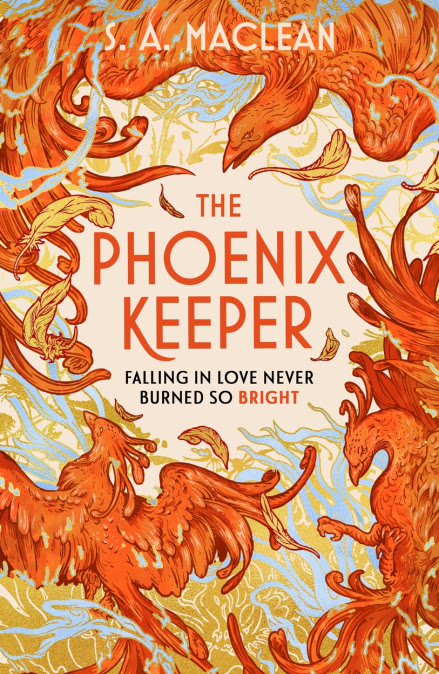
Review - The Phoenix Keeper by S A McLean


The Phoenix Keeper by S A McLean - cover

The Phoenix Keeper is an accomplished cozy fantasy that introduces new elements into its story while also keeping us in touch with some that are familiar. In a setting that seems parallel to the real world, a zoo containing magical creatures is looked after by Aila and her best friend, Tanya. What we get are superior world-building (probably influenced by the author's background as an ecologist), lively interactions, humour, real concern about the endangerment of animals, lucid descriptions and a genuinely satisfying finale. There are strong friendship and romance bits to the story, and a refreshing viewpoint from a main character with social anxiety. My only small criticism is that two of the main plot happenings felt like they could be predicted from a mile away. But that doesn't stop it being a truly satisfying book.

Aila, the main character, struggles with her life-long anxiety around strangers and large groups. She is an expert in her field, devoted to saving the lives of endangered phoenixes through a breeding program at the San Tamculo zoo. This city strongly resembles San Francisco and the environment seems much like our own, with smartphones and social media like 'Griffingram'. The zoo itself is described vividly and we get a clear picture of tourist crowds, night atmosphere and the animals' habitats and individual personalities. 

Aila's best friend is Tanya, committed and brave. Tanya has her own goal: a volunteering program to assist the zoo. We get to experience the strong friendship between Aila and Tanya, and though their amusing, cheeky interactions can see how much they genuinely care about each other. However, Aila's single-minded obsession with phoenixes can be a weakness, and she must re-learn to pay attention to Tanya's need for help.

Spoiler warning

Luciana is another zookeeper who seems eerily perfect, and is a person Aila has had a long dislike for because of a past misunderstanding. We find out eventually that Luciana conceals a vulnerability when she must deal with the loss of her own creature, a griffin. By gradually co-operating with Aila, we see her barriers break down. 

Then there's an 'enemies-to-lovers' trope as Aila and Luciana's difficulties are reconciled, and through this fresh understanding a romance develops. And another tried-and-true plot element appears later when a 'dark horse' character betrays Aila in a plot against her precious animals. While there's nothing wrong with all this, they're hardly unexpected events when they eventually occur.

The final chase sequence, however, kept me in genuine suspense and was a great way to finish off the book. As was Aila's journey to finding love and personal freedom, with her successes in the faces of of her zoo colleagues, superiors and even a large audience.

Rating: 4 stars (out of 5)

⭐⭐⭐⭐

Thanks to Hatchett Book Group & Netgalley for an ARC of this book. 

Wednesday, 22 May 2024

Review - Jamaica Ginger and Other Concoctions by Nalo Hopkinson


Review - Jamaica Ginger and Other Concoctions by Nalo Hopkinson
I had encountered some of Nalo Hopkinson's stories before starting this collection and admired them. So it's with pleasure I can say this is another varied set with which she shows a talent for making strange and thought-provoking tales with concerns including Western and Caribbean cultures, gender, climate change and adaptation and resilience. And cute swimming pigs!

'Broad Dutty Water' is one of the longest and strongest stories. Jacquee is a young female member of a 'taz', an ocean farming cooperative created after a catastrophic climactic flooding process, the Inundation, that has affected the local Caribbean environment. She has received a new 'wetware' cybernetic implant which allows her to bond with and control machines like her ultralight flying craft. Her unpreparedness with the implant is partly what causes her plane to crash on an isolated island, where she must fend for herself. While there, she discovers miraculous 'blob stuff' in a lagoon which may hold the key to preserving endangered species in the face of climate doom. But it is the engaging language and interaction of Jacquee and the other characters in the story which is the most enjoyable.

In 'Jamaica Ginger, we get a 'teslapunk' tale about another young female protagonist in a setting that resembles early 20th century America with many of its racial attitudes. But the usual steampunk cliches are flipped on their head, as the main characters are now poor, disadvantaged people of colour. Plaquette is at the mercy of a master in his workshop, creating mechanical servants or 'Georges', despite that fact that she is the real talent behind his inventions. It's a well-crafted tale with an ending involving a departure to her own personal freedom.

Things take a darkly humourous tone with 'Inselburg', which is an often funny narration by a future Caribbean native tour guide. During his imaginary island tour ride, he also relates startling details about dire flooding and an environment that is surviving despite ecological poisoning and disaster. There are also some wicked jabs about foreign tourists and a stark lack of compassion by the guide, as he passes on his cheeky, deadpan way. 'Repatriation' is another related story, in which a local Caribbean couple must deal with their own feelings when taking part in a tourist cruise, awkwardly finding that all the serving people on the ship are of their own background. But it ends with another burst of hope for the future against climate change.

It might be just my own preference, but the fantasy tale 'San Humanite' is my favourite. It is really just all about a general feeling and aesthetic, which really worked for me. It has the best weird atmosphere in any story this side of H.P Lovecraft. Also 'Whimper' is another tale with a surreal tone, but this time a nightmare.

I would say the parts of this collection that worked best for me were the author's energetic use of Caribbean vernacular, a grasp that is very convincing, at least to an outsider. There's a wide variety in the stories, from slice-of-life ('Waving at Trains'), to blisteringly fast microfiction, to eerie interactions with mysterious creatures ('Child Moon'). Hopkinson's focus on rising sea levels and their effects on island nations is a worthy one. However, her sometimes angry stories may not be for every one - despite how historically racially justified they may be. 'Clap Back' is a story that will get almost any reader feeling indignant, and is a viciously sly satire focused at the misuse of the identity of people from developing countries in Western marketing and fashion. However, I was left wishing there was a bit more balance in the racial approaches in some of the stories.

The author has a great way of telling tales, regardless, and it's clear she has things that are important to tell.

Rating: 4 stars (out of 5)

⭐⭐⭐⭐

Friday, 19 April 2024

Review - The Fall Is All There Is by C.M Caplan


Cover - The Fall Is All There Is by C.M Caplan

Review - The Fall Is All There Is (Four of Mercies Book 1) by C.M Caplan

In this book, we follow the story of Petre Mercy, a member of a royal family in a setting that resembles a possible future Earth. Petre is part of a family dynasty that was begun by a cruel father, and he and his siblings must find their separate ways forward after the king's death. The story is told in the first person, from the viewpoint of Prince Petre, an authentically portrayed (high-functioning) autistic character, who has run away from his family background. 

The setting is that of a world recovering from several waves of scientific advances then 'annihilations'. Cyborg animals like horses are organically grown, then mechanically implanted with clockwork-style technology. This hybrid, fantastical technology co-exists with a social structure like that of the feudal houses of Europe. The air surrounding recent battles or places of death is possessed by 'gaunts', ghosts that may infect ordinary people. These atmospheric details are some of my favourite parts of the book (although I was left wishing there were more).

The main character, Petre, struggles with his neuro-divergent condition and his own limitations. He tries to resist 'stimming' in order to blend in with others; he is hyper-sensitive and sounds like fingernails drumming make him experience a 'sensory nightmare'; he hyperfocuses on mundane details like a cut on skin; and he must often retreat from too much stimulus. Petre must take regular, chemical injections to increase his reflexes, strength and capabilities and help with 'fitting in'. He is flagrantly bisexual and finds it hard to control and resist his impulses. 

The plot of the story mainly revolves around Petre's dealings with his siblings. Edgar is shown to be a shady, manipulative, Machiavellian character who tries to lure Petre into his custody. The split between Petre and his brother is a shocking one in the early part of the book. Anoise is the new heir to the throne, the oldest, and is trying to find a way past her own inexperience and cautious nature and to retain her grip on newfound power. Desmon is the diplomat, and ultimately proves himself courageous in a difficult journey with his brother.

We see how the others around Petre deal with him and his condition. Some treat it as something to step around; Edgar falsely offers to embrace Petre's nature; while his mother is cold and critical. He relates how she would 'get scornful and start talking about the autism. The way she wished that she could cure it, the way it was hurting everyone around me'. This was a convincing and sympathetic portrayal of family life for someone with a disorder.

Some parts of the novel did not work for me: I thought a lot of the long, drawn-out dialogues had a sensational tone (although this probably again reflects overly Petre's sensitive nature). The author himself, with the story, shows some of the traits of the main character: indulgently focusing on some things (like descriptions of rats in the dark), and an impulse to keep holding up the awkwardness of prolonged dialogue.

However, these are small things and it's overall a promising book. The last quarter of the book has a gripping journey, a wicked betrayal and begins development of the military conflict. If the next book can carry out the kind of tight story of that quarter, I'll look forward to the next volume.

Rating: 3 stars (out of 5)

⭐⭐⭐

Tuesday, 12 March 2024

Review - Born of Light and Shadow by Ryan Kirk


Born of Light and Shadow by Ryan Kirk - Cover

Review - Born of Light and Shadow by Ryan Kirk (Legend of the Adani #1)

At first, I thought this would be another solid adventure fantasy by the author. But it emerged as something far better than that, and so far it's my favourite read of 2024! In a world where most humans can wield a type of magical force known as adani, two siblings must set out in order to overcome the forces of the Debru, a sinister, supernatural race of shadow creatures. Dead circles of grass have emerged that threaten their world. Elian seeks to warn others of this sign, also seeking recognition as a warrior, while his sister, Samora, is more interested in using magical bindings for the healing and growth of their world. There's a gripping final third of the book, and as a wonderful addition we get sentient dragons inserted to the mix as well.

The world-building is detailed and deceptively understated. The people of the book are divided into those of the Villages, who farm and provide food for others, and the Wandering Clans, whose duty is to protect all against the threat of the Debru. The clans have been fighting a long, losing war against the Debru: they must protect their territories but also have a tendency not to trust one another. Likewise, Elian and Samora's village must deal with the trauma of some of their members killed by the Debru, including their own father.

Elian dreams of becoming a great warrior, partly out of desire to revenge his father. But he is unique and cannot manipulate the bindings of the adani magic, and must deal with feelings of inadequacy. This is until he finds he does indeed have a rarer talent, that of diverting magical flows inside himself. He discovers that his strength is born of desperation, impulse and need. His relationship with Harald, the wily, but heroic and committed clan leader, lets him develop his abilities and grow throughout the novel.

His sister, Samora, is an opposite. She is naturally talented at magical binding and is highly sensitive to the flows of adani around her. From this, we get a realistic depiction of an introverted main character who retreats from the overly stimulating adani flows she senses around her, speaking out seldom, but is still able to always keep a reserve of quiet strength. Samora learns from several mentors in the art of healing. She also attracts a follower and defender, Karla, a much older master adanist and former warrior chief. Karla is another accomplished introverted character: she is strong, tough and fatalistic. Together they must go forth on an independent mission of their own, to seek out the heart of the mystery behind the Debru and the dying circles of land.

The challenge of these dead circles lets out some revelations of the secrets behind the shadow creatures. There are the kettu, dog-like attackers; the otsoa, something like shadow-wolves; the debru, foot soldiers commanding these inferior forces; and the belog, lordly, dark sorcerers who direct the malevolent troops. But the fading circles are also bound up with a mystery that involves the last diabolical Debru type, the Vada, the most fearsome, resembling demonic gods.

This central puzzle behind the origins of the Debru is partially revealed in tantalising visions experienced by Samora. Who are the strange people she sees conducting a doom-laden ritual? Why do the Debru creatures just stand still, never eating, and why do they seek to attack all humans? I guess we'll have to wait till book 2 to find out. The dead circles of land, bound with the Debru, are countered by the Gathering Grounds of the clans, places of regeneration, overwhelming magic, growth and healing. Once again, I enjoyed Kirk's use of areas of spiritual sanctuary in his world.

The last third of the book is full of engaging plot revelations and action, as it should be. Characters must also deal with the added threat of possession by the shadow creatures, an interesting complication. I particularly enjoyed the characters of the dragons uncovered by Elian, and Elian's own path of self-discovery, accomplishment and redemption in the face of battle. The overall message that main characters discover is a satisfying one, that they must work in harmony with their world and the forces of nature magic, in order to reach a successful outcome. The magical system itself has some deceptively deep concepts, in particular its similarity to ideas of karma and self-healing systems of the natural world. It's pleasing to see what the author can achieve without the bloat of other epic fantasy series. I have no hesitation in recommending this classy, enjoyable book and am definitely going to look out for the next in the series.

Thanks to Netgalley and Xpresso Book Tours for an ARC of this book.

Rating: 5 stars (out of 5)

⭐⭐⭐⭐⭐


Wednesday, 28 February 2024

Review - Merchants of Knowledge and Magic by Erika McCorkle


Merchants of Knowledge and Magic by Erika McCorkle - cover
 

Review - Merchants of Knowledge and Magic by Erika McCorkle

 This is an epic book that I found intriguing because of its strangeness and the seemingly obsessive level of world-building it contains. Calinthe, a "merchant of knowledge" and also a rare creature cross-bred between two races, must carry out several missions across worlds and through magical portals. She engages in various games of knowledge and intrigue, until the time she is caught in the web of some nobles of the diabolical female-dominated Ophidian people. At the three-quarter mark, the book then makes an abrupt shift into some outlandish and often disturbing content, which may not appeal to all readers.

The novel does flow well, however, and it is hard to not become swept up in the swelling display of imagination and detail in its universe, the Pentagonal Dominion. I felt close to the main characters, especially regarding Calinthe's relationship with Zakuro and the quirky Demon Lord, Williford, and also the outrageous Requiem (a "merchant of hedonism"). I haven't read anything so outlandish and odd since finishing A Wrinkle in Time or Perdido Street Station. Because of its strangeness and elaborate magic system, this fantasy series could likely become one with a cult following.


Thanks to Netgalley for an ARC in return for a review of this book.


Rating: 4 stars (out of 5)

⭐⭐⭐⭐

Saturday, 17 February 2024

Review - The Daughters' War by Christopher Buehlman

The Daughters' War by Christopher Buehlman - cover

 Review - The Daughters' War by Christopher Buehlman

In this book, we see a different side to the world of The BlackTongue Thief. It's a prequel to that story and explores the events of the "Daughters' War", fought mostly by many widows and women soldiers. Galva (or Galvicha), the main character, is also female and from a noble background, and her viewpoint is a contrast to the first book's in many ways. We follow Galva and the army, as well as several other members of her family, as they move in several campaigns and looming battles. 

There's a cynical tone in regards to the events she describes, and a message of the importance of telling the truth about what actually unfolded rather than how others have preferred to describe it afterwards. Despite a slow beginning, Galva's story of how her unit of magical bird warriors assists and redeems the war effort becomes a fulfilling tale of love, disappointment, humour, the importance of religion and courage in the face of traumatic events. At times, the author also lets shine the deftly sly or vulgar wit that he excels at, but in a more restrained way.

The story, as Galva tells it, is that of a resigned character caught up in the tragic and often bleak history of the war. The people tasked with fighting the goblins, the "kynd", are a diverse group from different nations. One of their main problems is they cannot agree among themselves. Among the ruling class, for every brave aristocrat there are many more who are instead held up as arrogant, foolish, corrupt, decadent, cowardly or licentious. Her fallen elder brother, Migaed, is a prime example. The priests of Sath (a sun god) are revealed as weak, and one battle's downfall is due to one tempted by a goblin drug, 'godsmilk'. The more common soldiers and knights, however, are the ones who are forced to make the real sacrifices, and this is the group Galva has joined.

There are two other viewpoints in the book, those of Galva's other brothers in the dom Braga family. Pol is a courageous capable military leader, misled by misplaced lover. Amiel is a peaceable, scholarly young apprentice to a formidable wizard, Fulvir. I enjoyed their letters that made up some chapters, which add a bit of variety and in Amiel's case, humour. 

We get to appreciate the strong bonds between Galva's fellow corvid-trainers and their special birds. These bonds turn out to have a heavy cost when they must take part in a war, however. This is part of the reason that Galva's tale veers toward revenge and grimdark territory near the end. There are some surprisingly dark battle descriptions (goblins treat humans as a food supply, remember), which perhaps shows some of Buehlman's occasional horror background. But Galva ultimately finds a salvation and an ability to "let go" in a religion that worships "the Bride", a goddess of death, and also finds a refuge in the love of several characters.

Some of the highlights for me were the cynical disrespect with which most of the characters privately regard their superiors. There was a real sense of realism in the way the medieval-style army was portrayed, with its constant needs for supplies, fickle morale levels and the inevitability of internal conflict. Some of my favourite funny bits were the misadventures of Amiel while invisible (and naked), and the trash-talking between Galva and an old soldier. However, I wasn't a big fan of some of the mystical sections in the story to do with the Dal-Gaata religion, and one chapter which tells one their stories just lost me. And at times there are some sentimental, wistful musings by Galva that seemed like indulgence.

However, this is yet another winning fantasy yarn by Christopher Buehlman and I wouldn't hesitate the read another set in this same world.

Rating: 4 stars (out of 5)

⭐⭐⭐⭐

Saturday, 20 January 2024

Book review - A Rival Most Vial by RK Ashwick

A Rival Most Vial by RK Ashwick - Cover

Here we have it: a cosy fantasy by an indie author, which must contain something special in order to make it to the final round of the current SPFBO competition.


Review: A Rival Most Vial by RK Ashwick

A Rival Most Vial by RK Ashwick is a book which is most attractive because of its general light-heartedness and the engaging, playful interactions between its characters. Two merchants in a fantasy town must learn to co-operate with each other, as part of a joint potion-making project they agree to undertake. There are some misunderstandings, sad personal histories and difficulties that the main characters must overcome. But the support they receive from those close them results in a feel-good tale with some sweet romance and 'Yes!' moments. There's also a novel, curious magical system that seems derived from baking (yes, baking) in the real world.

The story takes place in the area of Rosemond St, where we are introduced to group of shopkeepers who all know and support each other like one big, diverse family. Ambrose is a potion seller and a half-elf, and had been given away by his family at an early age to be an apprentice to an emotionally cold potions master. Because of this, Ambrose was virtually raised by the other merchants of the street. He is scholarly and introverted, preferring to remain isolated in his potions shop. He reacts with upset and suspicion when a stranger moves into the vacant shop across from his. This is Eli, a human from another area, Kolkea, and he quickly comes into competition with Ambrose as he, too, is operating a potions shop.  Eli is his opposite: he is sociable and a lover of sports and adventure. We also meet Dawn the wand maker, Ambrose's overworked and stressed-out best friend.  

At first, Ambrose and Eli take part in a tit-for-tat bitter rivalry to entice the most customers to their own shops. This ruthless competition, instead, merely drains them and their finances. However, they then find they both must agree, because of the financial rewards offered, to a commission that involves working together. They must brew a special, difficult potion for the mayor's daughter, Beatrice, whose birthday wish is to be able to fly like a dragon with purple wings for one day. To complicate matters, Ambrose and his friend, Dawn, have a falling out, and Eli and Ambrose find their feelings for each changing. There is a bit of danger to face several times, and Eli must face against his natural drifter's inclination, and decide on a future career.

What happens next follows basically an enemies-to-lovers trope, as attraction blossoms between Ambrose and Eli. It's a cute romance, as they grow closer together over the course of the commission's challenge. Some of the winning parts of the story are the book's chapter titles, which are cleverly reminiscent of recipe step instructions and provide insight as to the current state of the characters' relationship development. I found the elaborate potion-mixing stages which Eli and Ambrose go through engaging and interesting. The overall tone or story elements made me think of the Dungeons & Dragons world maybe combined with a sweet Hallmark movie. Or something like the new breed of Netflix rom-coms with LGBTQ characters.  

I did find a few of the fantasy concepts slightly awry. For example, characters seemed to be able to just wave (any number of) wands a bit too conveniently in order to solve a problem, or just swig a magic potion. And I would've liked some more lore and background about the characters and location. But my main issue was that the central romance was just too predictable; there were lots of hints given and anyone could see it coming early on. But these are minor concerns.

Rating: 4 stars (out of 5)

⭐⭐⭐⭐